Concrete Floors & Pads in Boonville, MO
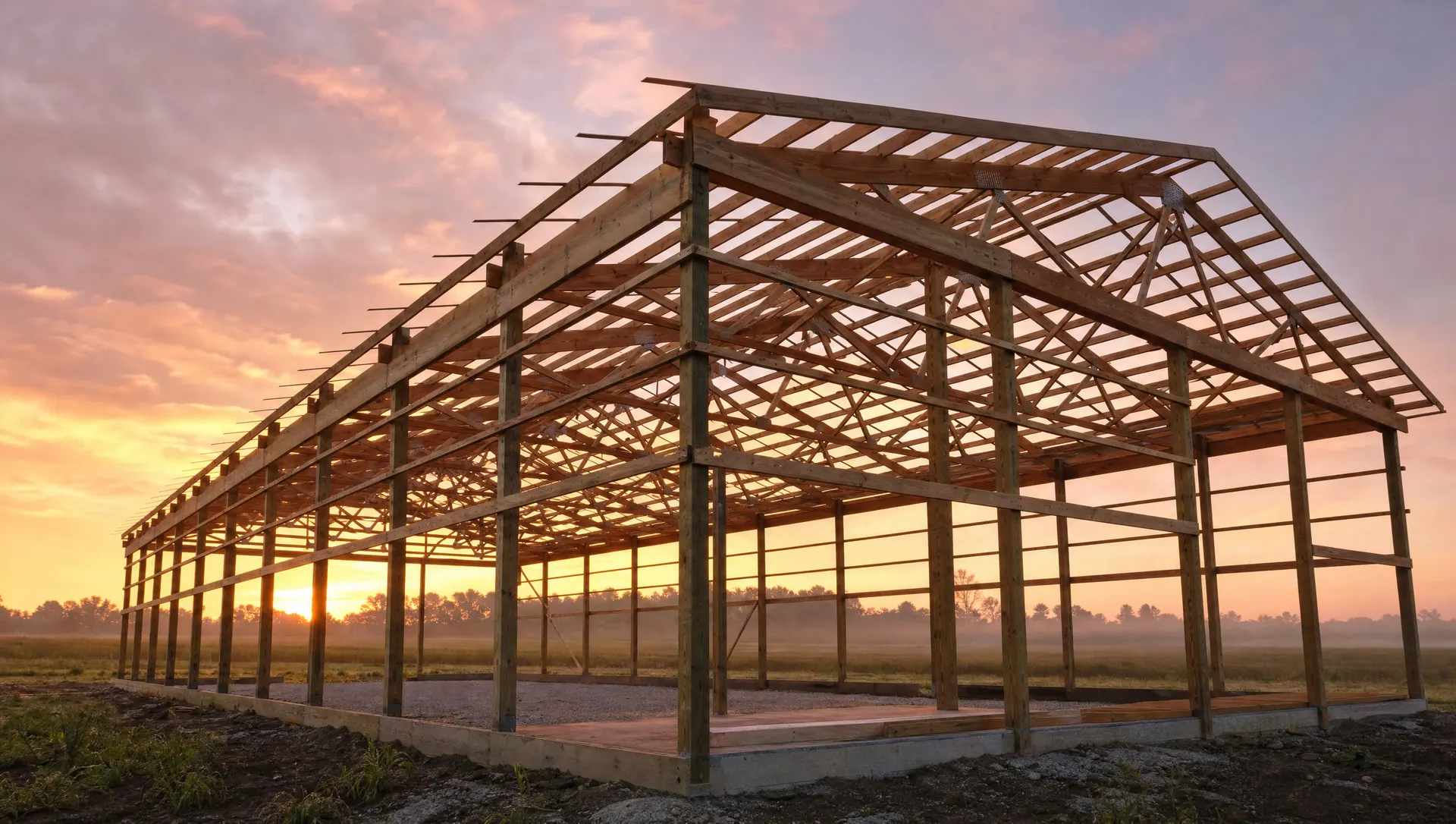
Not every concrete job starts with a new building. Sometimes it's a pole barn that's been standing on dirt or gravel for years and it's finally time for a real floor. Sometimes it's a pad poured ahead of a building that's coming later. Sometimes it's just a slab for equipment, a pad for a shed, or an apron in front of a door that turns to mud every spring. Boonville Pole Barns pours concrete floors and pads on their own, not only as part of a building package. Work like this often gets scheduled around everything else going on at a property, fit in whenever timing and weather line up rather than treated as one big-ticket project.
What's Included in a Concrete Floor or Pad Project
Concrete work typically includes:
- Site prep and grading to get the base right before any concrete gets poured — this step affects how the slab performs for years afterward
- A properly compacted base, usually gravel, to support the slab and manage drainage underneath it
- Forming and pouring the slab to the thickness and finish the project calls for, whether that's a basic utility floor or a finished shop floor
- Control joints placed to manage natural cracking as concrete cures and the ground shifts slightly over time
- Reinforcement where the load calls for it — heavier equipment or vehicle traffic typically needs a different spec than a light-use storage floor
We treat the base and prep work as seriously as the pour itself, since a slab is only as good as what's underneath it.
Built for Cooper County Ground
Ground conditions vary a lot across Cooper County — clay-heavy soil in some areas, sandier ground closer to the Missouri River bottoms, and everything in between. That affects how a site needs to be prepped before concrete goes down, and skipping proper base work is one of the most common reasons a slab cracks or settles unevenly within a few years. We look at the actual soil and drainage on-site rather than pouring the same way everywhere.
Temperature swings matter too. Missouri sees real freeze-thaw cycling through the winter, which stresses concrete that wasn't finished or jointed correctly. Planning for that upfront costs less than fixing a cracked or heaving slab later.
Finish Options and Timing
Concrete finish is its own decision, separate from thickness and reinforcement. A broom finish is the standard choice for most utility floors and pads, since it's economical and provides good traction in a space that will see dirt, water, and equipment. A smoother steel-troweled finish works better for a shop floor where you want an easier surface to sweep and roll tool carts across, and sealing that surface afterward cuts down on dusting and makes stains easier to clean up.
Timing matters just as much as finish. Concrete cures properly within a specific temperature range, which means pours in the coldest part of a Missouri winter need extra planning — cold-weather mix additives, insulation blankets, or simply waiting for a better stretch of weather. Extreme summer heat has the opposite problem, curing the surface too fast if it isn't managed correctly. We plan pour timing around actual conditions rather than a fixed calendar date, since a rushed pour in the wrong conditions causes problems that show up months later.
When to Call About Concrete
Concrete projects come up in a few common situations:
- An existing pole barn or shed has a dirt or gravel floor that's finally becoming a real problem
- You're planning a new building and want the pad ready before construction starts
- You need a standalone slab for equipment, a generator, a hot tub, or something else that needs a stable, level base
- An old concrete pad or apron has cracked, settled, or heaved and needs to be replaced
Even if the project is just the concrete and nothing else, it's worth a call to talk through what the site needs. Property owners preparing to sell or list a place sometimes call about concrete too, since a cracked pad or a bare-dirt floor in an otherwise solid building is the kind of thing that stands out during a walkthrough.
What Affects the Cost
Concrete pricing typically comes down to square footage, slab thickness, how much site prep and grading the ground needs, and whether reinforcement is required for heavier loads. A basic utility pad on ground that's already reasonably level and well-drained typically costs less than a shop floor poured over soft ground that needs significant base work first. Finish level matters too — a broom-finished utility floor is a different job than a smoother, sealed floor meant for a finished shop. We give an actual number once we've seen the site, since ground conditions can change the prep work more than almost anything else in the estimate.
Can you pour a floor inside a pole barn that's already built?
In most cases, yes, as long as there's enough clearance to get equipment inside and the existing structure doesn't interfere with forming and pouring. We look at the specific building to confirm access before quoting the work.
How thick does a concrete floor need to be?
It depends on what the floor needs to support. A light storage or walking-traffic floor typically needs less thickness than a floor that will see vehicles, heavy equipment, or a vehicle lift. We spec the slab to the actual load rather than using one thickness for every project.
How long before a new slab can be used?
Concrete gains most of its strength within the first few weeks, though it keeps curing longer than that. Light foot traffic is typically fine fairly early on, while heavier equipment or vehicle loads need more time before they're safe to bring onto the slab. We'll give you a specific timeline based on the mix and conditions for your pour.
Get a Free Quote
Tell us about the space — new build, existing building, or standalone pad — and we'll follow up with a straightforward, free quote.
Planning a Pole Barn in Cooper County?
Tell us what you're building and we'll get back fast with a free, no-pressure quote.